
How to Check Criminal History in Howard County
No single Howard County criminal history database answers every question. Start with the kind of proof needed. A filed local charge belongs in JUSTICE and at the County or District Court clerk's counter. A sheriff report comes from the Howard County Sheriff. A statewide fingerprint-supported arrest and disposition history comes from Nebraska State Patrol PCH. Current local custody requires a phone call because Howard County publishes neither a jail roster nor a booking blotter.
Gather the full name, date of birth when lawful and available, likely filing year, and any case or incident number. Exact spelling matters, but an extra middle initial can hide a JUSTICE match. Work from the narrow local source toward broader state and federal sources only when the question calls for them.
- Choose the record: police report, booking status, court case, or statewide PCH history.
- Search the free courthouse JUSTICE terminal or the paid statewide service for filed Howard County cases.
- Call the Sheriff or Communications for a recent arrest, booking location, warrant question, or sheriff report.
- Compare the name, court, filing year, charges, and disposition before treating a result as the correct person.
- Ask the original custodian for a paper or certified copy when the record must be authenticated.
Howard County Criminal Record Counters
The Howard County Courthouse at 612 Indian Street in St. Paul brings four key record offices under one roof. County Court and District Court use different case roles, even though both publish the same main telephone number. The Sheriff works from Suite 13, while the County Attorney occupies Suite 3. That compact layout is useful only after the reader identifies which office created the record.
- Howard County Sheriff: Suite 13, 612 Indian Street, 308-754-5433; weekdays from 8:00 a.m. to 5:00 p.m.
- County Court Clerk: Suite 6, 612 Indian Street, 308-754-4192; weekdays from 8:00 a.m. to 5:00 p.m.
- District Court Clerk: 612 Indian Street, PO Box 47, 308-754-4192; weekdays from 8:00 a.m. to 5:00 p.m.
- County Attorney: Suite 3, 612 Indian Street, 308-754-4075; prosecution and charging office.
The official courthouse contact directory shows how those offices share the building. The captured directory below is a practical starting point before a visit.
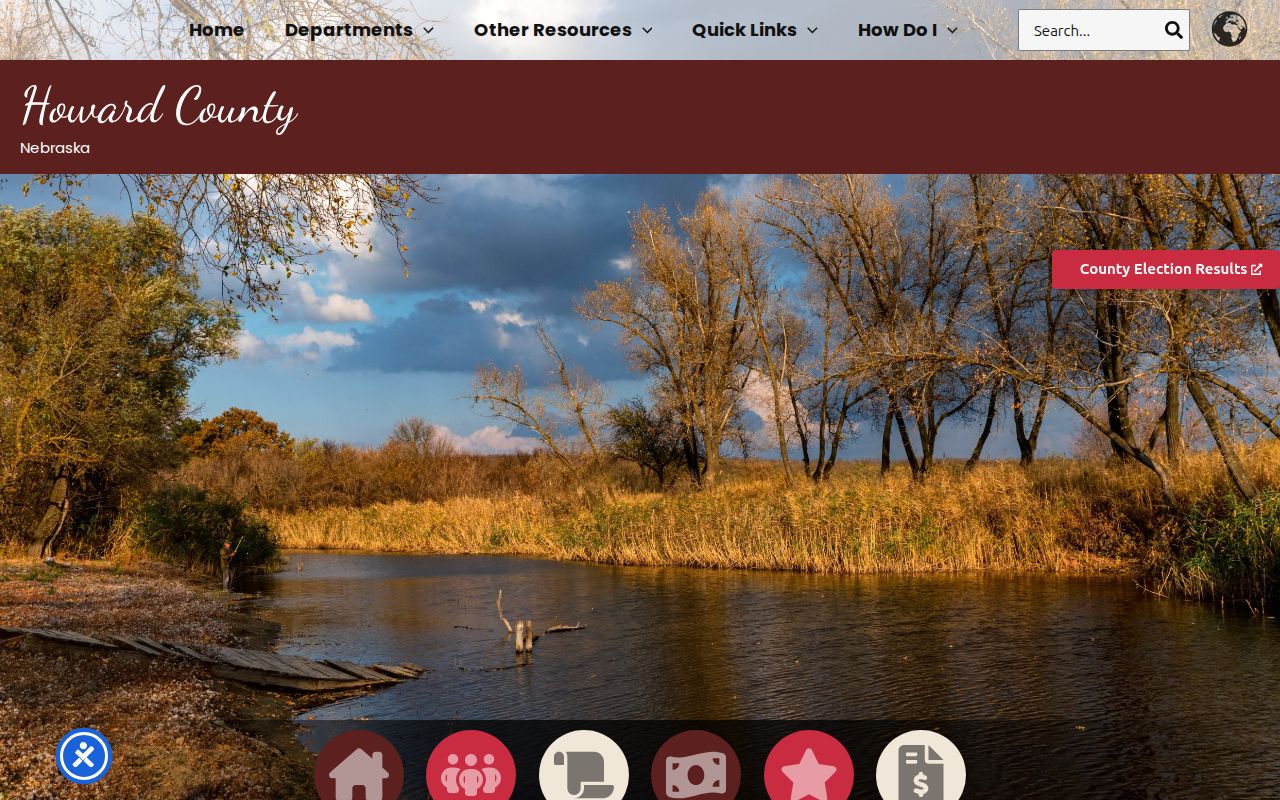
Call the specific counter first if the file is old, archived, sealed, or not visible through the public terminal.
Official Nebraska Background Checks
The Nebraska State Patrol Criminal Identification Division maintains the central criminal-history repository. Its Patrol Criminal History system provides a name-based Nebraska report for $30. The public version includes eligible adult, fingerprint-supported arrests and linked dispositions, subject to the nonpublic rules in section 29-3523. A complete history that can include otherwise eligible nonpublic entries requires the subject's notarized release.
PCH may be ordered online, by mail, or at a State Patrol troop office. No-record results can arrive in minutes, while a possible match can take up to three business days for review. The report remains available for 14 days, and the fee is not refunded when no public record is found. Howard County Sheriff also takes fingerprints by appointment for $10, but the receiving agency must specify the card and submission method.
The State Patrol criminal-history request page explains those channels and limits.
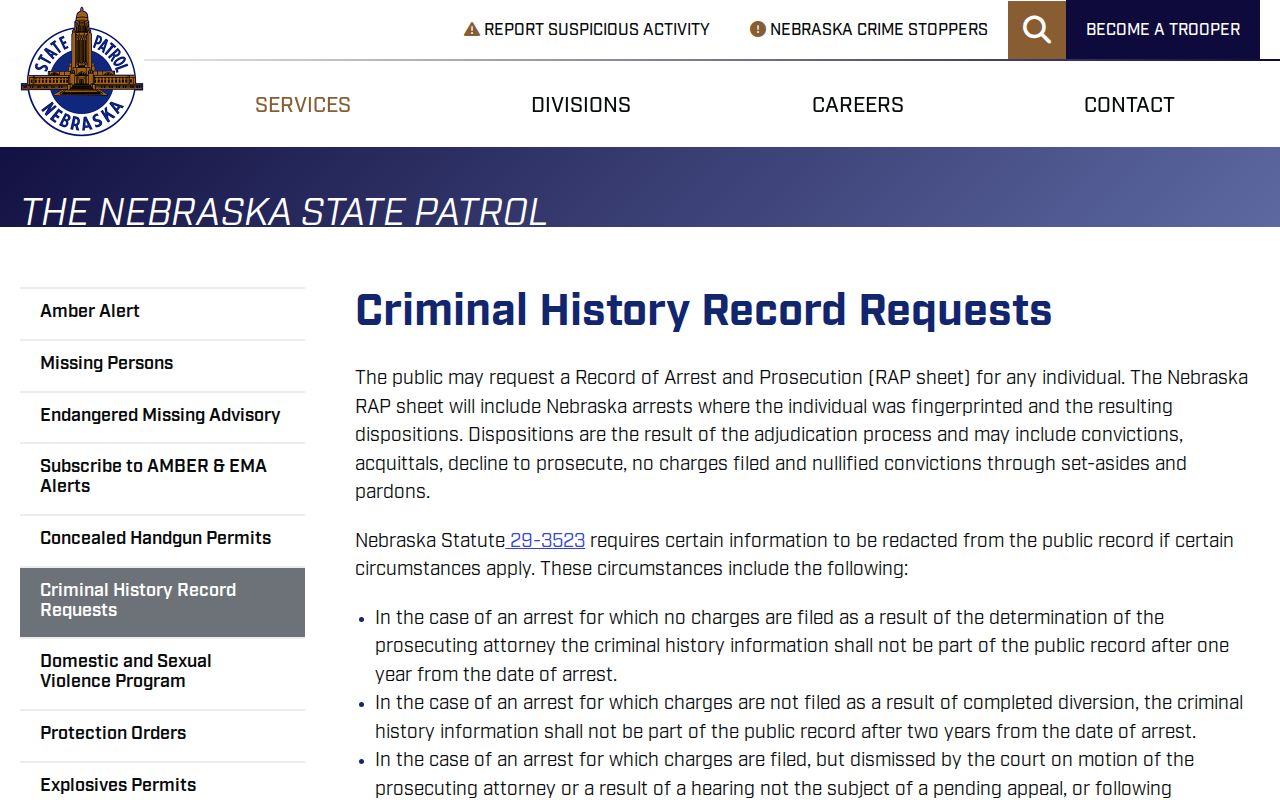
The image helps distinguish the official state product from a Howard County court search or local incident report.
Howard County PCH or JUSTICE
PCH and JUSTICE are related, but they are not substitutes. Use JUSTICE to understand the filed court case, including hearings, motions, the register of actions, financial assessments, disposition, and public document images. Use PCH to review Nebraska fingerprint-supported adult arrest cycles and the dispositions that reporting partners returned to the state repository.
| Source | Best question | Access | Main limit |
|---|---|---|---|
| Howard court terminal | What was filed and how did the case end? | Free at the courthouse | Public court material only |
| JUSTICE online | Which public Nebraska trial-court cases match? | One-time or subscriber search | About a 24-hour new-case lag |
| NSP PCH | What public Nebraska arrest and disposition history is linked? | $30 online, mail, or troop office | Not a police narrative or pleading file |
| Sheriff request | What does the local incident or accident report say? | Phone, email, or counter | Agency file, not the final court outcome |
A Howard County dismissal may appear in the court docket before the linked PCH cycle is corrected. When an outcome is missing, confirm it with the clerk, then follow the State Patrol correction or quality-assurance route rather than assuming the arrest record is final.
Types of Criminal Records
Howard County criminal records form separate layers. The arresting agency writes the incident or arrest report. A jail custodian creates booking and release data. The prosecutor decides what charge to file. County or District Court then creates the case docket and outcome. State Patrol PCH connects a fingerprint-supported Nebraska arrest with dispositions reported by courts or prosecutors.
- Incident and arrest report: the agency narrative, event details, alleged offense, and officer action.
- Booking record: intake time, presented charge, bond, property, custody, and release events.
- Court file: filed charge, appearances, motions, orders, judgment, sentence, costs, and restitution.
- Warrant record: issuing court, case, issue date, type, and bond when those fields are public.
- Custody or supervision record: local jail status, NDCS incarceration, probation, or parole information.
- Registry record: the public fields authorized through the Nebraska Sex Offender Registry.
Jurisdiction gives the first clue about a charge. Howard County Court hears misdemeanors, infractions, traffic matters, city ordinance cases, extraditions, and felony preliminary hearings. Felony trials move to District Court. Nebraska grades felonies from Class I through IV and misdemeanors from Class I through V, with separate Class W categories for driving under the influence. The statute in effect on the offense date controls, and enhancements can change the class or penalty.
Police reports remain agency-specific. St. Paul-created incident material should be requested through City Hall or its police contact, Sheriff and accident reports go to the county office, and State Patrol incidents use the state public-record channel. For community safety information, the Howard County sex offender check explains the official registry without reproducing names or private profiles.
Charges can change between booking and prosecution. For the full filed history, use the Howard County criminal court case file rather than relying on the intake charge alone.
Howard County Arrest and Custody Trail
Howard County has no official online jail roster or booking log. Call the Sheriff at 308-754-5433 during office hours or Communications at 308-754-5458 for recent custody. Give the full name and approximate arrest time, then ask which agency made the arrest and which facility holds the person. St. Paul Police, the Sheriff, State Patrol, or another agency may own the report.
NDCS becomes relevant after a state sentence, not at the start of a county arrest. The NDCS Incarceration Records Search supports a name or NDCS number query.
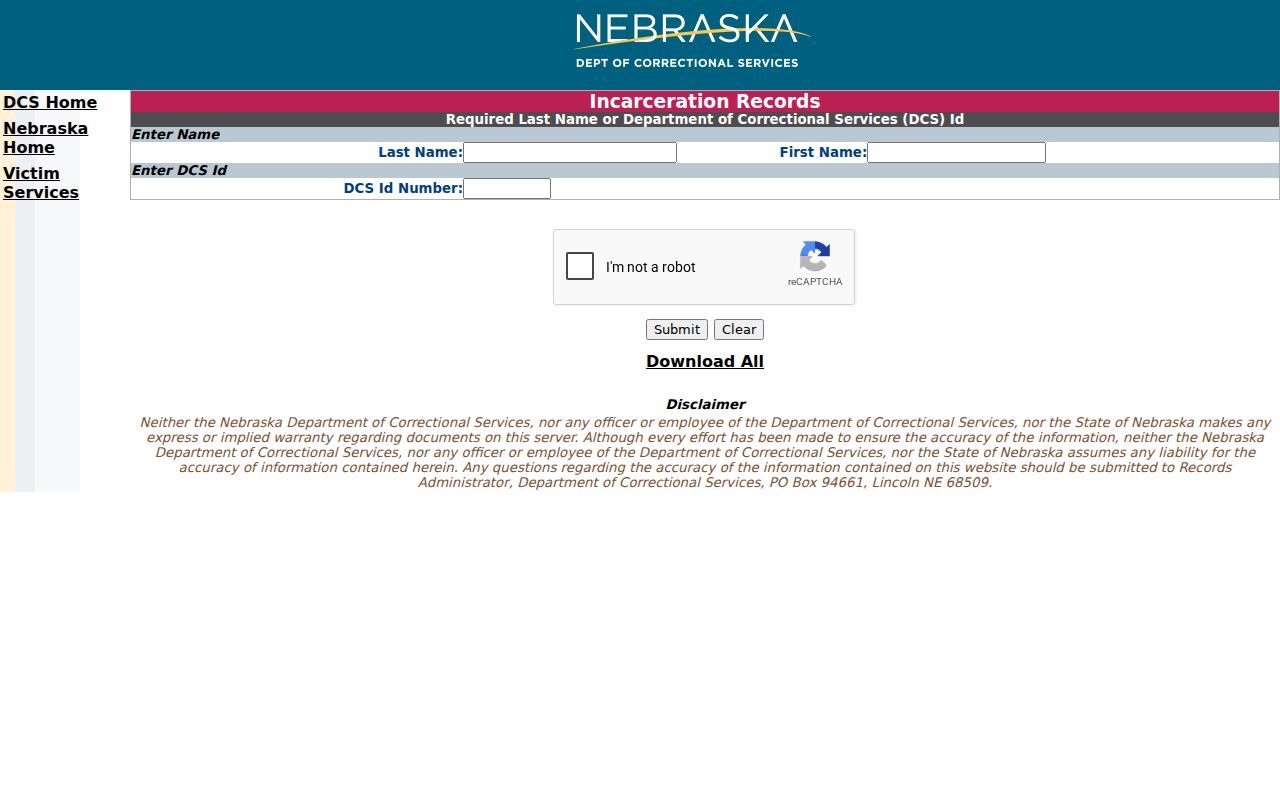
Its result can show public custody, sentence, offense, and release-related data, but not the confidential institutional case file.
Howard County warrant status also lacks a local online list. Confirm a bench warrant with the issuing court or the Sheriff, and ask for current surrender or payment instructions. Do not assume an online payment clears a warrant at once.
What a Howard County Criminal Record Shows
The fields depend on the custodian. A PCH report groups identity data and aliases with separate arrest cycles. JUSTICE focuses on the case number, court, parties, judge, offenses, docket events, money assessments, outcome, and available public images. Booking material focuses on the custody event. Compare dates and identifiers before drawing a conclusion from a name match.
| Name and identifiers | Displayed name, aliases, date or age data, and agency or case identifiers as law permits. |
|---|---|
| Arrest and booking | Arresting agency, event and intake dates, presented charges, booking number, bond, release, and holding site. |
| Filed charges | Complaint or information, statute, offense class, amendments, and count-level status. |
| Case activity | Appearances, attorney filings, hearings, orders, judge notes when public, and the register of actions. |
| Disposition | Dismissal, acquittal, plea, conviction, deferred judgment, or another recorded outcome. |
| Sentence | Probation, jail, prison, fines, restitution, and post-release supervision when ordered. |
Victim identity, juvenile material, sealed records, medical data, security information, and protected investigation details may be omitted or redacted.
Read Howard County Criminal Case Numbers
A Nebraska case number has five parts. The first letter identifies District Court or County Court. Next comes the two-digit county code, a two-character case type such as CR or TR, the two-digit filing year, and an identifier of up to seven digits. Those parts help Lisa Johnson's shared court contact route a request to the correct file.
- Arraignment
- The hearing where the charge is stated and a plea is taken.
- Disposition
- The recorded outcome of a charge or case.
- Deferred judgment
- Judgment is delayed while conditions are met, and success may lead to dismissal.
- Set aside
- Nebraska relief that nullifies a qualifying conviction and removes set civil disabilities without erasing the historical record.
- Sealing
- Removal of eligible material from ordinary public access while authorized justice access remains.
Use a full case number when requesting certified copies. If only a name is known, start broad in JUSTICE, then narrow by Howard County, court type, filing year, and case type.
Public Access Laws
Nebraska law favors access to public government records, but it also sets firm limits. The correct route begins with the record's custodian. Howard County Sheriff answers for its reports, the court clerk for filed case material, St. Paul Police for city-created reports, State Patrol for PCH, and NDCS for prison records. A public-record request does not replace criminal discovery or override a seal.
Key Nebraska laws:
Neb. Rev. Stat. §84-712 grants inspection and copy rights during normal office hours, subject to other law.
Section 84-712.05 permits specified sensitive material to be withheld.
Section 29-3523 limits public dissemination after several non-conviction outcomes.
Section 29-4009 separates public registry fields from law-enforcement-only data and protects victim identity.
Active-investigation harm, juvenile confidentiality, sealed files, victim privacy, and protected supervision material can restrict access. Ask for a written statutory reason if a formal request is denied.
Howard County Sheriff Record Requests
The Sheriff does not label a separate records division and does not publish an online request form. Call 308-754-5433, email hcso@howardcountyso.org, or visit Suite 13 during weekday office hours. A useful request identifies the event, names, date range, location, incident number when known, desired format, and whether inspection or copies are requested.
| Service | Published charge | Practical detail |
|---|---|---|
| Sheriff or accident report | $10 | Call or email; cash or check |
| Fingerprinting | $10 | Appointment required |
| PCH history | $30 | State Patrol, not the Sheriff |
| JUSTICE one-time case search | $15 overview or $17 live terms | Confirm the live checkout amount |
Requests requiring more than four cumulative staff hours may include custodian time after the first four hours under state law. Pending-case evidence is different. A represented defendant should work through counsel and the court process rather than treat the public-record counter as discovery.
Sealed, Expunged & Restricted
Nebraska uses several distinct remedies. Under section 29-3523, specified arrest history becomes nonpublic after set periods or outcomes, including no filing, diversion, dismissal, acquittal, deferred judgment, and qualifying problem-solving-court completion. A law-enforcement-error arrest can support a narrow expungement petition. Juvenile sealing follows separate statutes.
A set-aside under section 29-2264 may be available after certain completed sentences. It nullifies a qualifying conviction and removes specified civil disabilities, but it does not erase the historical court record. A seal removes eligible material from ordinary public access while preserving access authorized by law. The Judicial Branch adult sealing form asks for the original court, county, case number, exact case name, charges, dates, and qualifying outcome.
Start by obtaining the correct PCH or JUSTICE record, then file in the original court and ask the Howard County clerk about current copy or filing costs. No Howard-specific sealing fee is published online.
Howard County Supervision Records
Probation and parole follow different systems. Nebraska probation is administered by the Judicial Branch, not a Howard County department. A public court docket can show that probation was imposed and later motions or orders, while officer notes and the supervision case file are not a general public database.
The Nebraska Judicial Branch probation page identifies the statewide structure.
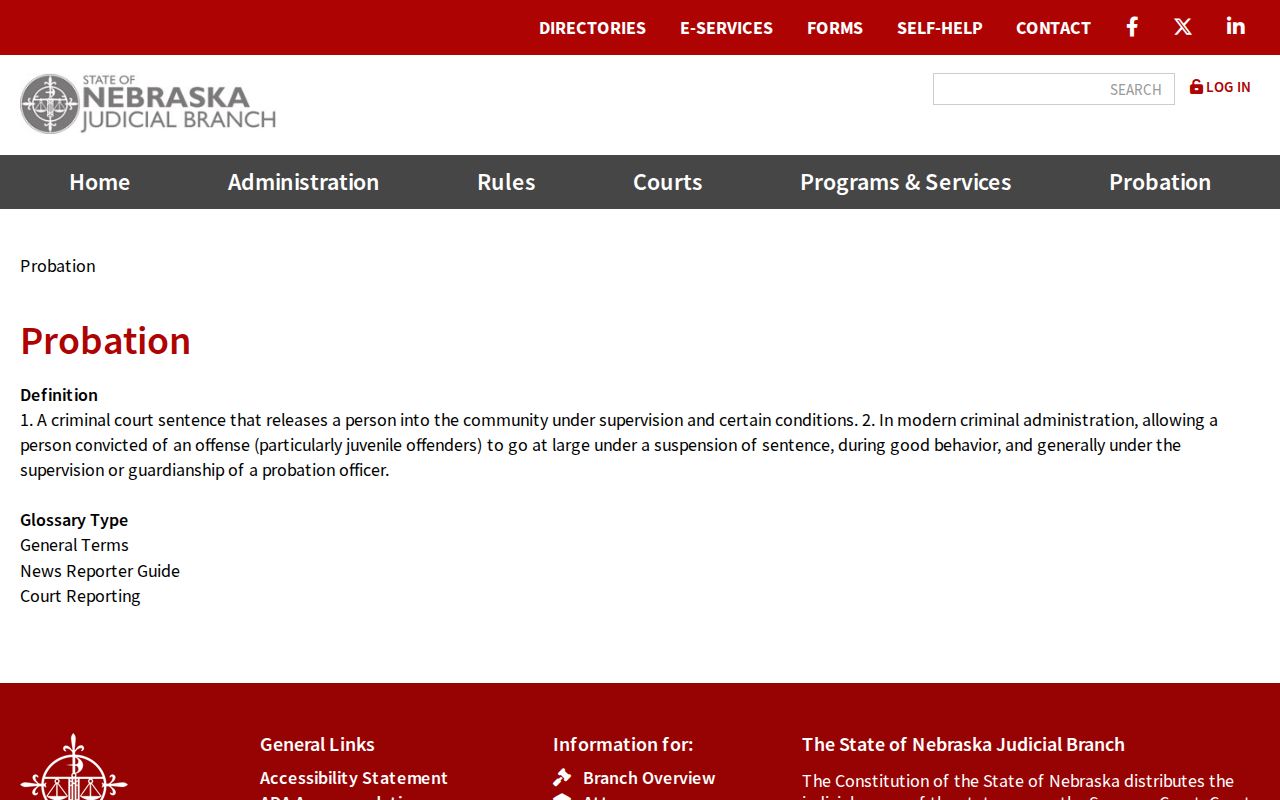
Use the Howard County case docket first to confirm the sentence, then use the Judicial Branch directory for the office currently serving the case.
The Nebraska Board of Parole makes release and revocation decisions, while the NDCS Division of Parole Supervision manages people released from state custody. The official Nebraska parole page describes that split.
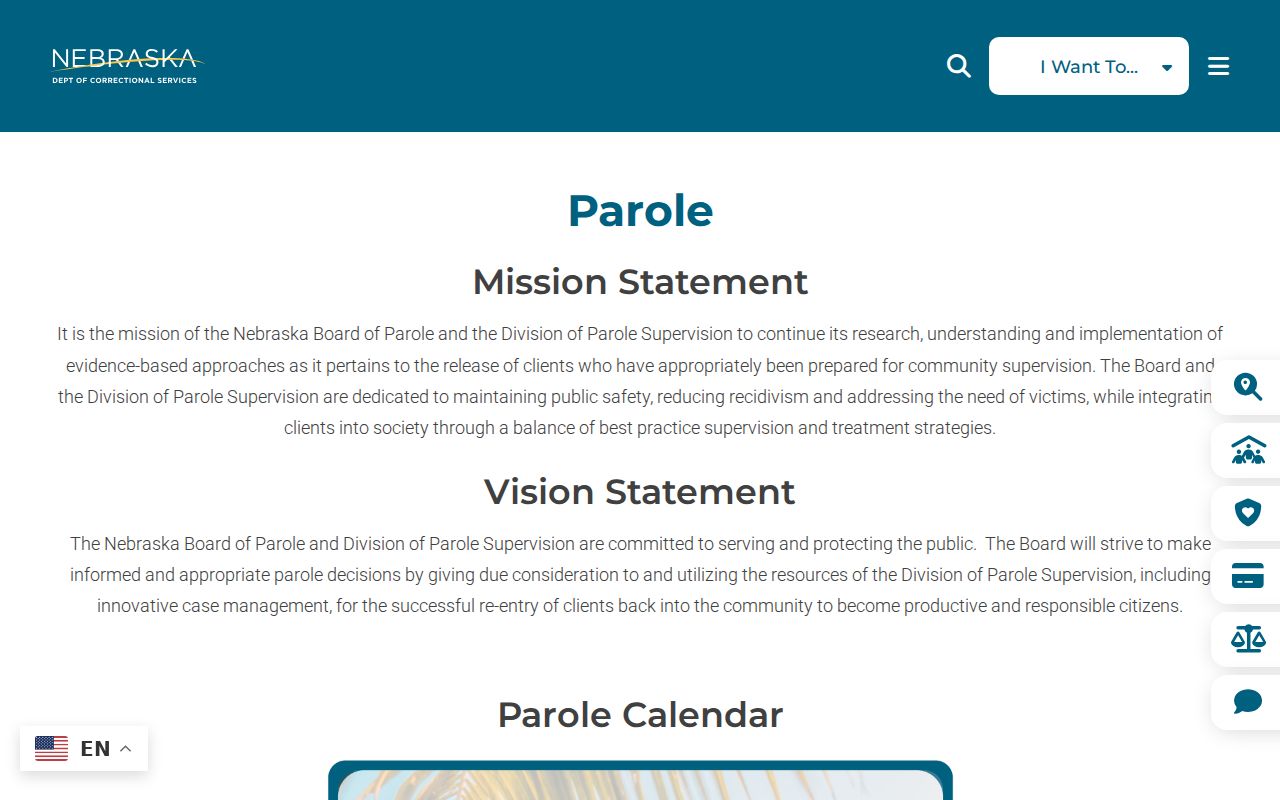
Combine the Howard County court file, NDCS public custody record, and parole authority information rather than expecting one county supervision list.
Criminal Records by City in Howard County
Local access differs across Howard County. St. Paul has the only separately documented municipal police department and routes city-created reports through City Hall and its police contact. Dannebrog and Elba have no documented village police records unit or local court portal, so the Sheriff, Communications, and Howard County courts form their verified chain. Exact population totals are not repeated because the official research set did not expose a clean current place table.
St. Paul Criminal History
City police reports, shared dispatch, County Court ordinance cases, and District Court felony files.
Dannebrog Criminal History
Sheriff-created reports, Communications custody checks, and Howard County court records.
Elba Criminal History
Village events route to county custodians, then to state systems when appropriate.
Each city record should still be traced to the agency that created it. A city name in an incident does not turn the report, booking entry, court case, and PCH history into one file.
Howard County and Federal Records
Federal cases and custody sit outside the Howard County criminal record system. PACER holds federal dockets for the U.S. District Court for the District of Nebraska. The FBI Identity History Summary is a fingerprint-based path for a person reviewing their own federal history. The Bureau of Prisons locator covers federal custody. None replaces JUSTICE, PCH, or a call about local detention.
The FBI electronic ordering portal begins the subject-only Identity History Summary process.
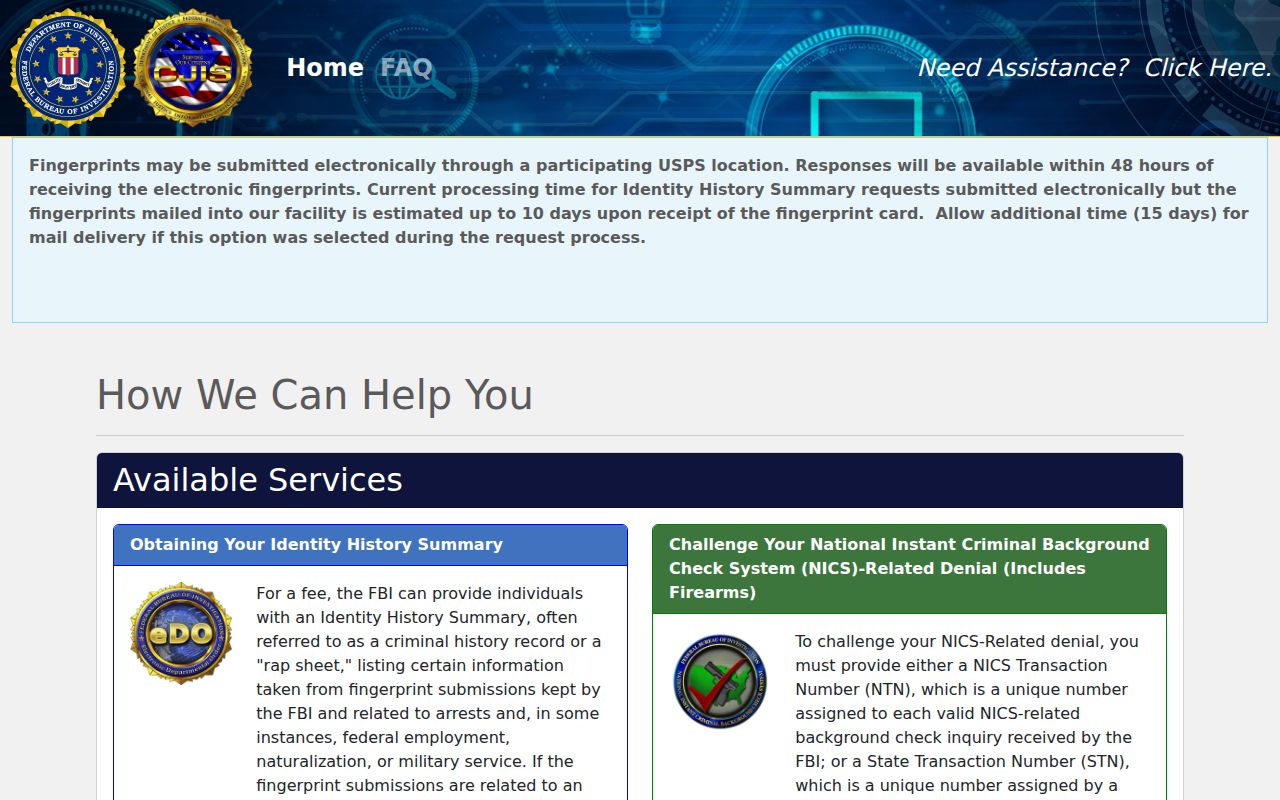
Fingerprint requirements and current federal fees should be confirmed on the official FBI instructions before submission.
The PACER service provides federal case access after account registration.
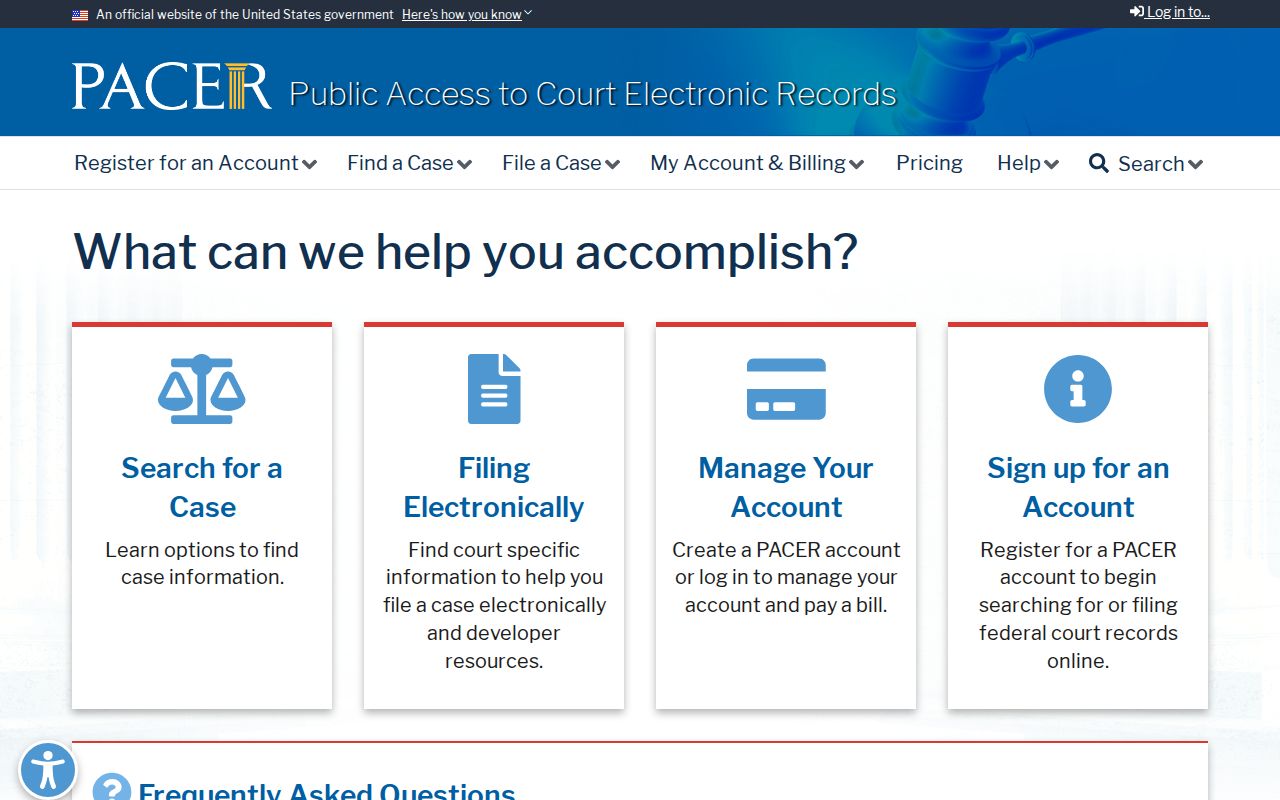
A Nebraska federal criminal docket will not appear as a Howard County case in JUSTICE.
The Federal Bureau of Prisons locator is the custody layer for a federal sentence.
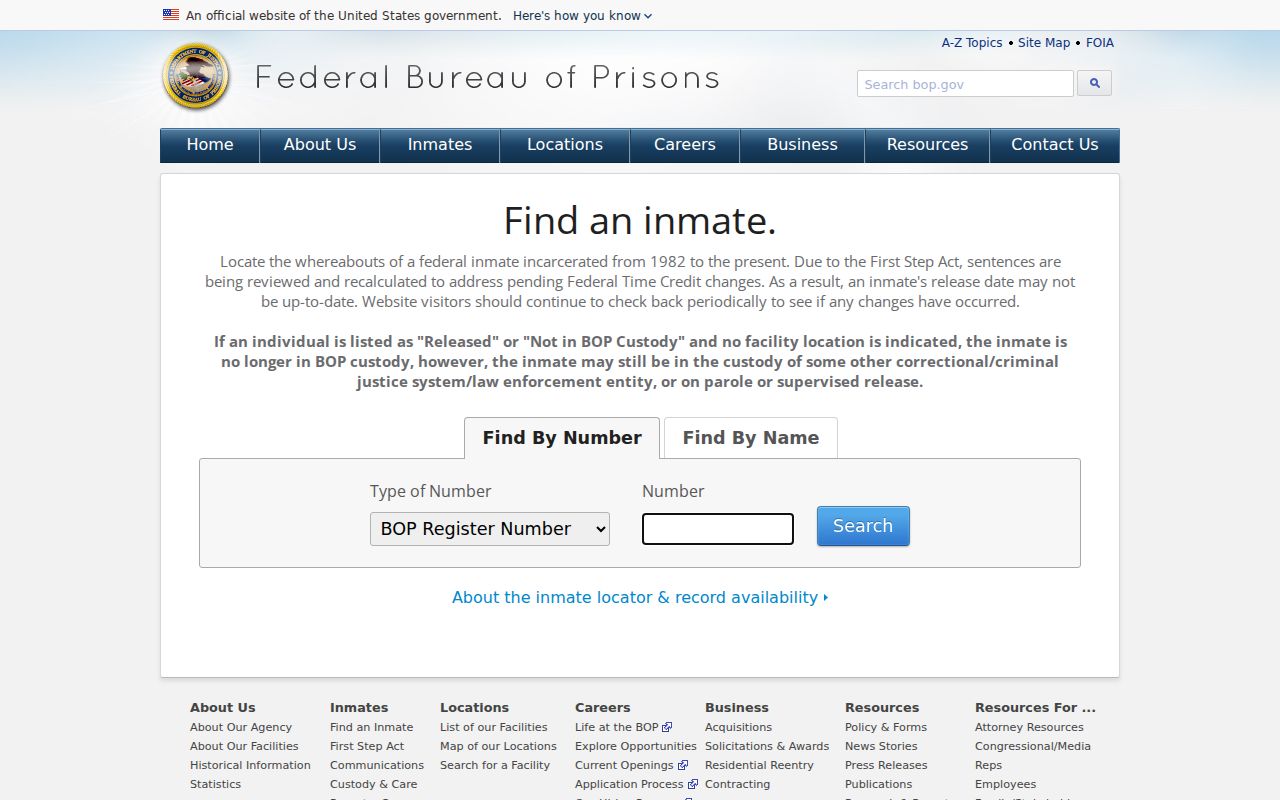
Use NDCS for a Nebraska state sentence and the Sheriff or Communications for recent Howard County custody.